
Table of Contents
A distribution-line operator is adding an independent fiber route. This guide examines ADSS cable span selection in the context of matching aerial cable to actual span conditions. The specific failure to prevent is that the span number in a model code is accepted without checking wind and ice assumptions.
An ADSS span designation needs the environmental and mechanical assumptions behind it. Compare wind, ice where relevant, temperature, cable mass and attachment loads for the actual spans. A model suffix resembling a distance should not be treated as proof that the cable is suitable for every span of that length.
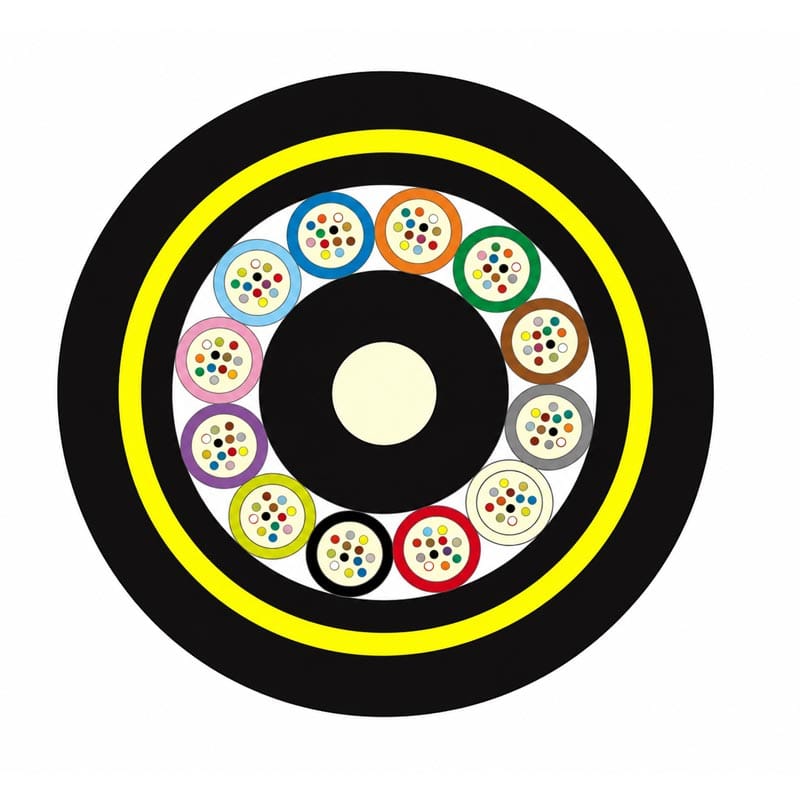
ADSS cable span selection: define the decision before the RFQ
The decision is matching aerial cable to actual span conditions. A technically useful enquiry should describe the operating situation, the physical interface and the result the owner needs to accept. For ADSS cable span selection, the central risk is specific: the span number in a model code is accepted without checking wind and ice assumptions. A catalog name or a general compliance statement cannot resolve that uncertainty by itself.
Prepare the three project-specific review records
1. Span-by-span length. Identify the project requirement for span-by-span length and its controlling document. Keep the response linked to the All-Dielectric Self-Supporting (ADSS) Aerial Optical Cable construction being evaluated.
2. Climatic load envelope. Compare the offered climatic load envelope with the actual site and equipment interface. Keep the response linked to the All-Dielectric Self-Supporting (ADSS) Aerial Optical Cable construction being evaluated.
3. Pole attachment capacity. Name the party responsible for approving pole attachment capacity and retaining the acceptance record. Keep the response linked to the All-Dielectric Self-Supporting (ADSS) Aerial Optical Cable construction being evaluated.
Compare specification routes on the same basis
| Decision route | What it establishes | What still needs review |
|---|---|---|
| Catalog description | Identifies a starting family for ADSS cable span selection | Does not settle span-by-span length or the site interface |
| Project-specific offer | States the proposed span-by-span length and climatic load envelope | Needs supporting evidence and approval of pole attachment capacity |
| Approved purchase baseline | Connects span-by-span length, climatic load envelope and pole attachment capacity to the same revision | Must be matched to the delivered identity and final installation |
Walk through a project decision before placing the order
Consider a hypothetical review meeting for this application: a distribution-line operator is adding an independent fiber route. The buyer has an initial offer for All-Dielectric Self-Supporting (ADSS) Aerial Optical Cable, but the concern remains that the span number in a model code is accepted without checking wind and ice assumptions. Instead of accepting the offer as complete, the team requests the document controlling span-by-span length and asks the supplier to show where the offered construction addresses it.
The next step is to compare that response with climatic load envelope. If the two are incompatible, the team identifies the affected drawing or interface and requests a revised proposal. It then checks pole attachment capacity against the revision before release. This sequence makes the ADSS cable span selection decision traceable: the final choice is supported by consistent evidence, and the reason for any change is preserved for the installer and owner.
Review tensile load through the complete installation route
The pulling or supporting arrangement must transmit load through components designed for that purpose. Identify the cable's approved load-bearing elements and the permitted installation method. Optical fibers themselves must not become the unintended load path. Route bends, elevation changes, friction and handling arrangements can increase stress beyond what a simple straight-line distance suggests.
Request the installation tension limit and the conditions behind it, then have the installation contractor prepare a route-specific method statement. For aerial systems, service tension, sag and structural loading belong in the engineered route design. For ducted or indoor systems, review guides, pulling attachments and supports at transitions. Keep the selected cable and hardware data consistent. If the field route changes, reassess the affected section instead of assuming that the original installation plan remains valid.
Use drum lengths to control joints and waste
Drum length affects more than freight. It determines where joints occur, how much spare cable is available and whether the installation can be completed through the planned access points. Build the delivery schedule from route chainage, endpoint allowances and accessible joint positions. Include permitted manufacturing length tolerance and the way actual lengths will be identified at delivery.
Compare a route-based cutting plan with a standard-stock proposal. Standard lengths may be convenient, but a short leftover section can force an additional joint in a poor location. Conversely, an oversized drum may be difficult to transport or unload near the route. Record the drum identifier against its intended section before dispatch. Where several drums are needed, agree how fiber identification continues between sections and keep surplus lengths identifiable for repair use rather than treating every offcut as equivalent spare cable.
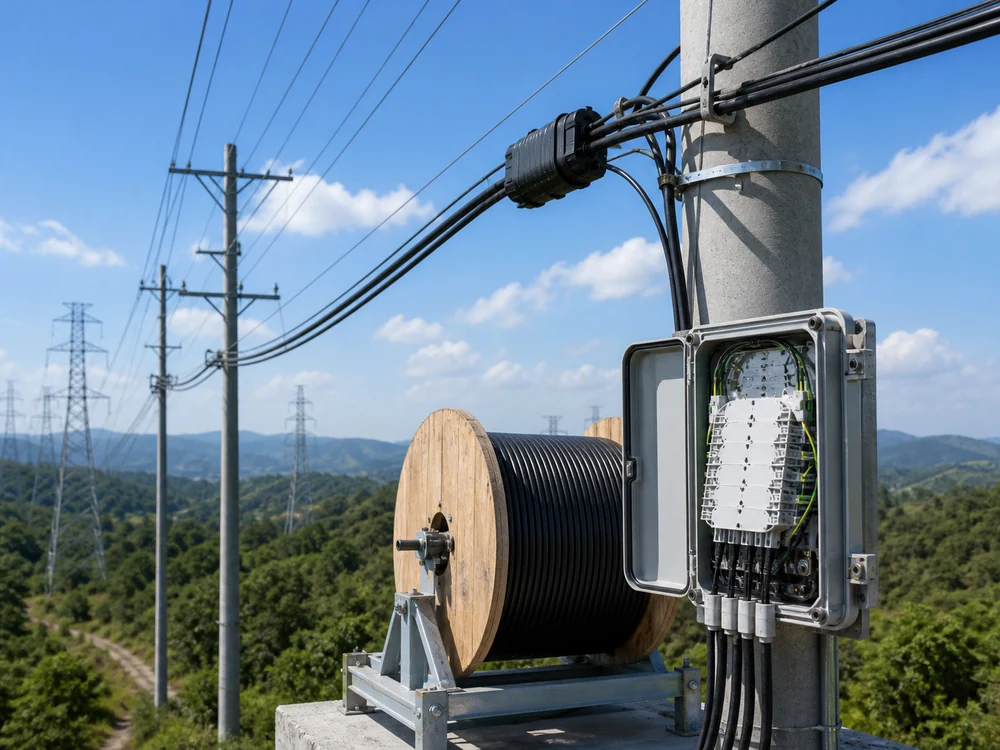
Check accessory compatibility before buying the cable
Cable performance depends partly on the components used to support, protect and terminate it. Build an accessory list that matches the offered cable diameter, construction and route conditions. Depending on the application, this may include aerial fittings, joint enclosures, glands, breakout protection, splice trays or indoor termination equipment. Similar names and visual appearance do not establish interchangeability.
Obtain written confirmation of compatibility from the responsible supplier or designer. Check available space, environmental capability and the method by which mechanical load transfers through the accessory. The bill of materials should identify quantities by route section or endpoint rather than leaving a general allowance. When an accessory is substituted after approval, review the affected cable limits and installation detail. Buying cable first and solving all fittings later makes it harder to compare quotations and increases the chance of mismatched site materials.
Verify the route survey before fixing the construction
Route assumptions determine the cable specification. Record whether each section is aerial, ducted, buried, indoor or inside power equipment. Note changes in elevation, access restrictions, water exposure and foreseeable interference from other services. For an existing route, distinguish measured conditions from information copied from old drawings. A drawing can show a duct that is no longer usable or an entry point that has been obstructed by later work.
Flag unresolved sections in the RFQ and agree who will verify them. A representative site survey or installation trial is often more informative than selecting a nominally stronger cable without understanding the constraint. Preserve the route information supplied to each bidder so later quotation differences can be explained. If the final alignment differs, assess the implications for drum length, joints, mechanical loading and optical budget before manufacturing or releasing the affected cable.
Turn the review into an inspection and release plan
Before releasing ADSS cable span selection for manufacture or dispatch, reconcile the quotation, approved drawings and inspection scope. The records for span-by-span length, climatic load envelope and pole attachment capacity should identify the same product and revision. List the evidence required from the supplier and the checks that remain with the site contractor. Resolve exceptions in writing, including who accepts the proposed deviation.
Background reference: ITU-T single-mode fibre framework. Confirm applicable requirements for the project; this link does not establish certification of an individual product.
Prepare a focused enquiry for Junneng Electric
Send Junneng Electric the application, quantity, required delivery window and the drawings or data needed to confirm span-by-span length, climatic load envelope and pole attachment capacity. Ask for a written ADSS cable span selection proposal with a clear construction, interface and inspection scope. Where technical details are still preliminary, identify them so they can be reviewed before order approval.
Explore the All-Dielectric Self-Supporting (ADSS) Aerial Optical Cable product page, the Optical Fiber range and Junneng’s requirement review and project-support services. Use the form below to discuss ADSS cable span selection and confirm the quotation scope.
Frequently asked questions
What should a buyer confirm when reviewing ADSS cable span selection?
Begin with span-by-span length, then check how it interacts with climatic load envelope and pole attachment capacity. These inputs define the application more clearly than the product name alone. Provide the actual project drawing or operating information and request an offered construction that addresses it.
What is the main application risk to avoid?
The main risk is that the span number in a model code is accepted without checking wind and ice assumptions. Prevent it by resolving the specific interface before order release and preserving the supporting evidence. If a bidder proposes a different arrangement, review the consequences with the responsible designer.
Can ADSS cable span selection be approved from a catalog listing?
A catalog listing is a starting point. The final review needs the proposed All-Dielectric Self-Supporting (ADSS) Aerial Optical Cable construction, relevant drawings and evidence for span-by-span length and climatic load envelope. Clarify any conflicting model code, dimension or material description before purchasing.
Which records are needed before order release?
Keep the approved specification, final drawing revision, product or batch identity, agreed inspection evidence and the record for pole attachment capacity. Define factory and site responsibilities separately so the owner can trace the supplied item through installation and handover.
How can Junneng support this project?
Send the application, quantity, delivery plan and project information for span-by-span length, climatic load envelope and pole attachment capacity. Request model-selection and quotation support with explicit assumptions, technical qualifications and the documents needed for approval. Confirm any installation or testing service in the agreed scope.